by
by India’s relationship with cricket runs deeper than sport alone. The nation’s best players often receive recognition that extends into formal public service roles across government institutions.
Several indian cricketers who have government job positions hold them through a combination of honorary commissions, sports quota appointments, and state government recognitions tied directly to their on-field achievements.
These roles span the Indian Army, Air Force, Reserve Bank, Income Tax Department, and multiple state police forces across the country.
Indian Cricketers Who Have Government Job
Source: The Statesman
The list is more selective than most fans realise. Understanding who holds what position, and on what basis, provides a clearer picture of how India institutionally values its cricket talent.
Top 10 Cricketers with Govt Jobs
Government appointments for Indian cricketers operate across both central and state institutions. Roles range from honorary defence commissions to permanent sports quota positions.
The designations reflect different levels of institutional engagement, from fully operational roles to ceremonial recognitions.
| Cricketer | Government Role | Department | State/Organisation | Year Appointed |
|---|---|---|---|---|
| MS Dhoni | Lieutenant Colonel | Indian Territorial Army | Central Government | 2011 |
| Sachin Tendulkar | Group Captain | Indian Air Force | Central Government | 2010 |
| KL Rahul | Assistant Manager | Reserve Bank of India | Central Government | 2014 |
| Yuzvendra Chahal | Income Tax Officer | Income Tax Department | Haryana | 2016 |
| Mohammed Siraj | Deputy Superintendent of Police | Telangana Police | Telangana | 2024 |
| Joginder Sharma | Deputy Superintendent of Police | Haryana Police | Haryana | Post-retirement |
| Kapil Dev | Lieutenant Colonel | Indian Territorial Army | Central Government | 2008 |
| Umesh Yadav | Assistant Manager | Reserve Bank of India | Nagpur | During career |
| Deepti Sharma | Deputy Superintendent of Police | Uttar Pradesh Police | Uttar Pradesh | During career |
| Harbhajan Singh | Deputy Superintendent of Police | Punjab Police | Punjab | During career |
| Richa Ghosh | Deputy Superintendent of Police | West Bengal Police | West Bengal | Recent |
The Indian cricketers government jobs list covers five distinct institutional categories across central and state government bodies, confirming that public sector recognition in Indian cricket is both broad and structurally varied.
1. MS Dhoni [Lieutenant Colonel in the Indian Army]
Government Role Overview
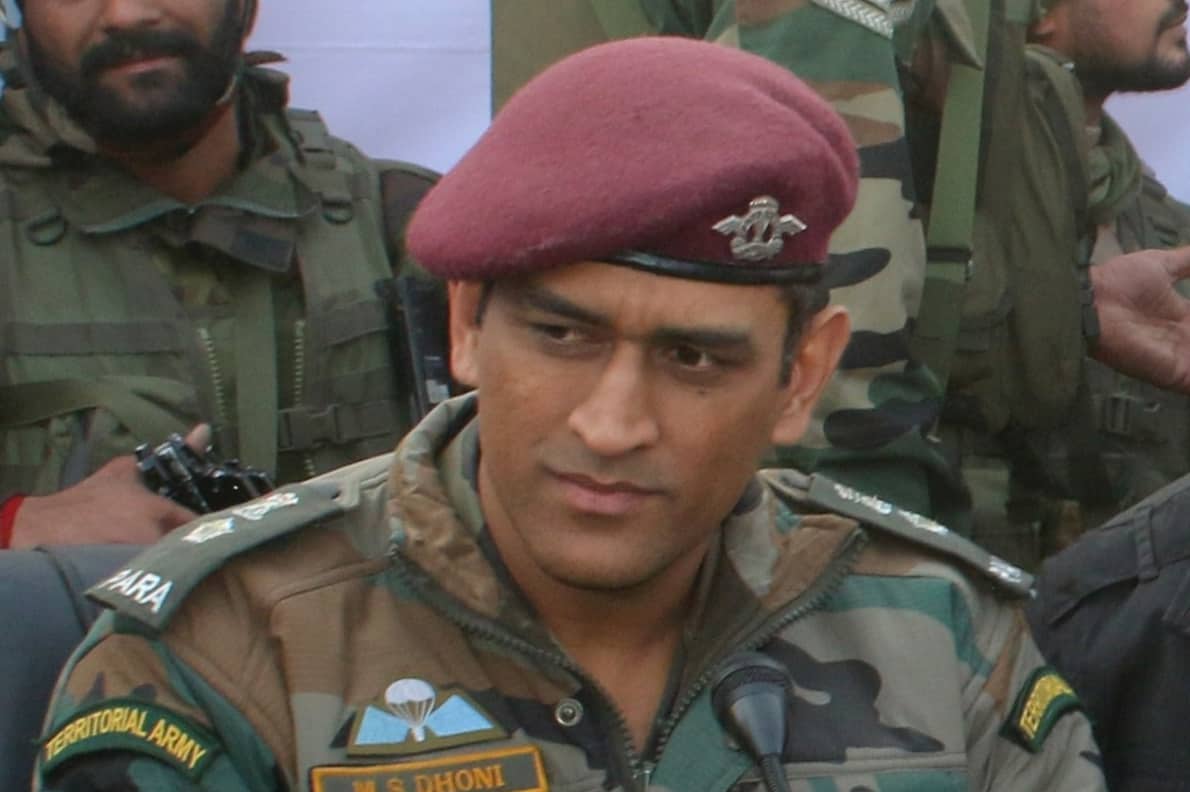
MS Dhoni holds the honorary rank of Lieutenant Colonel in the Indian Territorial Army. The commission was granted in 2011, making him one of the most prominent sportspersons to receive this formal recognition from India’s defence establishment.
Appointment Basis
The rank was conferred on an honorary basis in recognition of Dhoni’s extraordinary contributions to Indian cricket, most notably his leadership during the 2011 ODI World Cup. Notably, Dhoni completed actual physical training with the Parachute Regiment, going beyond the ceremonial nature of most such appointments.
Notable Public Service Element
Dhoni’s decision to undergo military training alongside serving soldiers added genuine substance to his Territorial Army association. His participation in field exercises drew significant national attention to the Territorial Army as an institution.
Current Engagement Status
The designation remains an active honorary commission. Dhoni does not hold operational military responsibilities but retains the Lieutenant Colonel rank as a permanent institutional recognition.
2. Sachin Tendulkar [Group Captain in the Indian Air Force]
Government Role Overview
The Sachin Tendulkar government job recognition came in 2010 when the Indian Air Force conferred upon him the honorary rank of Group Captain. This made him the first cricketer in Indian history to receive a formal honorary commission from the IAF.
Appointment Basis
The IAF awarded the honorary rank as a tribute to Tendulkar’s unparalleled 24-year career in Indian cricket, during which he became the highest run-scorer in both Test and ODI formats globally. The appointment was recognition-based rather than sports quota-linked.
Notable Public Service Element
Tendulkar has participated in IAF official events and used his Group Captain association to support defence recruitment awareness. His public identification with the Air Force has meaningfully extended the institution’s visibility among civilian audiences.
Current Engagement Status
Honorary Group Captain status. The role is ceremonial, involves no operational flying duties, and serves as a permanent tribute to his contributions to Indian sport and national identity.
3. KL Rahul [Assistant Manager at the Reserve Bank of India]
Government Role Overview
KL Rahul is employed as an Assistant Manager at the Reserve Bank of India. This is a structured permanent position within a central government institution, obtained through the RBI’s formal sports quota recruitment framework.
Appointment Basis
Rahul secured the role through the sports quota system, which allows elite nationally recognised athletes to enter central government bodies based on documented sporting achievement. The RBI has used this pathway to recruit multiple prominent Indian cricketers over the years.
Notable Public Service Element
Rahul has been associated with RBI public outreach campaigns, including consumer awareness initiatives focused on financial scam prevention. His involvement adds credibility and national visibility to the central bank’s literacy programmes.
Current Engagement Status
Active permanent government position. The RBI designation continues alongside his international cricket career, providing structured financial security independent of cricket-related income.
4. Yuzvendra Chahal [Income Tax Officer]
Government Role Overview
Yuzvendra Chahal serves as an Income Tax Officer in Haryana. The role was obtained through the state’s sports quota system in recognition of his consistent contributions to Indian cricket across white-ball formats at the international level.
Appointment Basis
Chahal qualified through Haryana’s sports quota framework, which creates formal entry points into government service for athletes who have represented India at the national and international level across recognised sporting disciplines.
Notable Public Service Element
The Income Tax Officer designation provides Chahal with a structured career alternative that runs entirely independently of his cricket earnings, IPL contracts, and team selection outcomes.
Current Engagement Status
Active government designation. Chahal continues to hold the Income Tax Officer position while playing for India and in the IPL across the current cricket calendar.
5. Mohammed Siraj [DSP in Telangana Police]
Government Role Overview
Mohammed Siraj was appointed Deputy Superintendent of Police in the Telangana Police. DSP Siraj received this formal recognition following his significant contributions to Indian cricket, particularly his performances during the 2024 ICC T20 World Cup campaign.
Appointment Basis
The Telangana government announced the DSP appointment as a direct response to Siraj’s World Cup performances. The state has maintained a consistent tradition of honouring its prominent sporting representatives through structured police service designations.
Notable Public Service Element
Siraj’s appointment carries strong symbolic weight given his personal journey from a modest Hyderabad background to becoming one of India’s most dependable pace bowlers across all three international formats.
Current Engagement Status
Active international cricketer with an honorary DSP designation. Regular operational policing responsibilities are not part of his current schedule, given the demands of his international cricket commitments.
6. Joginder Sharma [DSP in Haryana Police]
Government Role Overview
Joginder Sharma holds the position of Deputy Superintendent of Police in Haryana. He is one of the few former Indian cricketers to have transitioned into a fully operational government law enforcement role following retirement from professional cricket.
Appointment Basis
The Haryana government awarded Sharma the DSP position after he retired from cricket, directly recognising his iconic contribution of bowling the decisive final over in India’s 2007 ICC T20 World Cup final victory against Pakistan.
Notable Public Service Element
Unlike most cricketer government appointments, Sharma’s DSP role involves active policing duties. His post-retirement transition into operational law enforcement represents a meaningful second career rather than a purely ceremonial designation.
Current Engagement Status
Active DSP in operational service within Haryana. Sharma represents the most complete example of a former cricketer building a substantive full-time career within the government sector after retiring from sport.
7. Kapil Dev [Lieutenant Colonel in the Indian Army]
Government Role Overview
Kapil Dev holds the honorary rank of Lieutenant Colonel in the Indian Territorial Army. The commission was conferred in 2008, recognising his historic leadership of India’s 1983 ODI World Cup-winning team and his lasting contribution to Indian cricket.
Appointment Basis
The Indian Territorial Army awarded Kapil Dev the honorary commission twenty-five years after the 1983 World Cup triumph, acknowledging the enduring national impact of that achievement on India’s sporting culture and collective identity.
Notable Public Service Element
Kapil Dev has used his Territorial Army association to support veterans’ welfare initiatives and promote national sporting development. His military designation has provided a formal platform for his post-retirement public service work.
Current Engagement Status
Honorary Lieutenant Colonel. The commission is ceremonial, carries no operational military duties, and serves as a permanent institutional tribute to his contributions to Indian cricket and national pride.
8. Umesh Yadav [Assistant Manager at Reserve Bank of India]
Government Role Overview
Umesh Yadav holds the designation of Assistant Manager at the Reserve Bank of India’s Nagpur branch. The position was obtained through the RBI’s sports quota recruitment pathway available to nationally recognised athletes.
Appointment Basis
Yadav qualified for the RBI position based on his sustained international cricket career across Test and ODI formats. The Nagpur branch placement aligns with his home base in the Vidarbha region of Maharashtra.
Notable Public Service Element
The RBI appointment provides Yadav with a structured permanent income source entirely separate from his cricket earnings. It reflects the central bank’s consistent policy of recruiting prominent athletes through the sports quota framework.
Current Engagement Status
Active RBI Assistant Manager designation. Yadav continues to hold the position while remaining part of the domestic and international cricket selection processes.
9. Deepti Sharma [DSP in Uttar Pradesh Police]
Government Role Overview
Deepti Sharma serves as Deputy Superintendent of Police in Uttar Pradesh. Her appointment is among the most significant government recognitions extended to a women’s cricket player within India’s state-level sports quota framework.
Appointment Basis
The Uttar Pradesh government awarded Deepti the DSP designation through the sports quota system, formally acknowledging her sustained all-round contributions to the Indian women’s cricket team across all three international formats.
Notable Public Service Element
Deepti’s appointment signals a measurable shift in how state governments are treating women’s cricket achievements when making sports quota decisions within law enforcement institutions. It sets a clear precedent for future appointments.
Current Engagement Status
Active international cricketer and active DSP designation holder. Deepti continues to represent India in women’s cricket while maintaining her Uttar Pradesh government position.
10. Harbhajan Singh [DSP in Punjab Police]
Government Role Overview
Harbhajan Singh holds the rank of Deputy Superintendent of Police in Punjab. The designation was awarded through the sports quota system in recognition of his decorated international career spanning over two decades with the Indian cricket team.
Appointment Basis
Punjab’s government has a well-established tradition of recognising its prominent cricketers through police service designations. Harbhajan’s status as a two-time World Cup winner and one of India’s greatest off-spinners made him a natural candidate for state recognition.
Notable Public Service Element
Harbhajan has remained engaged with Punjab’s broader sporting ecosystem since retiring from international cricket. His DSP designation has been used to support state-level sports promotion and government public service initiatives.
Current Engagement Status
Retired from international cricket. The DSP designation remains a permanent recognition of his contributions to Indian and Punjab cricket throughout his extensive career.
11. Richa Ghosh [DSP in West Bengal Police]
Government Role Overview
Richa Ghosh holds the position of Deputy Superintendent of Police in the West Bengal Police force. Her appointment reflects West Bengal’s growing institutional commitment to recognising women’s cricket talent through formal government designations.
Appointment Basis
West Bengal conferred the DSP designation on Richa through the sports quota pathway based on her international performances for the Indian women’s team. The appointment at an early career stage is a notable departure from the norm of waiting until retirement.
Notable Public Service Element
Richa’s appointment establishes that proactive government recognition of active women cricketers is now a credible institutional practice in India, not limited to senior players or those at the end of their careers.
Current Engagement Status
Active international cricketer. The DSP designation is honorary and runs alongside her ongoing contributions to the Indian women’s cricket setup across all formats.
Government Roles vs Popular Assumptions
- Virat Kohli government job
Virat Kohli does not hold any government job, honorary or permanent. Despite being one of India’s most celebrated and commercially successful cricketers, he has never been appointed to any government department, defence institution, or public sector body.
- Virat Kohli government job salary
Since Kohli holds no official government position of any kind, there is no government salary associated with his name. His income is derived entirely from BCCI central contracts, IPL franchise payments, and commercial brand endorsements.
- Rohit Sharma government job
Rohit Sharma similarly holds no government designation of any nature. He has not been appointed through sports quota channels or honorary commission processes and earns exclusively through cricket contracts and commercial partnerships.
Indian Cricketers Government Job Salary Structure
Government pay structures for cricketers vary significantly depending on whether the appointment is honorary or operational.
Honorary defence commissions carry institutional prestige but typically involve no fixed monthly government remuneration.
Permanent positions such as DSP roles and RBI Assistant Manager designations carry structured pay scales under central or state government frameworks.
The Indian cricketers government job salary figures below represent current estimated pay bands for each designated role category.
| Role | Estimated Monthly Salary | Rank Category | Additional Benefits |
|---|---|---|---|
| Lieutenant Colonel (Honorary) | Ceremonial / No fixed pay | Honorary | Official designation, uniform entitlement |
| Group Captain (Honorary) | Ceremonial / No fixed pay | Honorary | IAF privileges, official recognition |
| Deputy Superintendent of Police | INR 56,100 – INR 1,77,500 | Permanent / Sports Quota | HRA, DA, medical benefits, pension |
| Income Tax Officer | INR 44,900 – INR 1,42,400 | Permanent / Sports Quota | Government housing, travel allowance, medical |
| RBI Assistant Manager | INR 55,000 – INR 75,000 | Permanent / Sports Quota | Banking perks, housing loan, group insurance |
FAQs:
- Which Indian cricketers have government jobs?
Confirmed holders include MS Dhoni, Sachin Tendulkar, KL Rahul, Yuzvendra Chahal, Mohammed Siraj, Joginder Sharma, Kapil Dev, Umesh Yadav, Deepti Sharma, Harbhajan Singh, and Richa Ghosh. Roles span defence, police, banking, and tax departments across central and state governments.
- Are these jobs honorary or permanent?
Both exist. Defence commissions for Dhoni, Tendulkar, and Kapil Dev are honorary. DSP designations and RBI positions held by players such as Siraj, KL Rahul, and Chahal are permanent appointments secured through the structured sports quota recruitment system.
- Do active players perform administrative duties?
Active international cricketers are generally exempt from regular office or administrative duties due to their playing schedules. Sports quota appointments include provisions that allow athletes to fulfil national cricket commitments without conflicting with government service requirements.
- Which states appoint the most Cricketers With govt jobs?
Haryana, Uttar Pradesh, and Punjab have historically led state-level appointments. Telangana and West Bengal have made significant recent appointments, reflecting a broader national trend toward formally recognising cricket achievement through government employment.
- Are there Indian cricketers who have government job in india through sports quota?
Yes. Sports quota is the primary route for most permanent appointments. KL Rahul and Umesh Yadav joined the RBI through this pathway. Chahal entered the Income Tax Department via sports quota, and DSP designations across multiple state police forces follow the same structured recruitment framework.
Conclusion:
India’s institutional framework for recognising cricket achievement through government appointments is both structured and expanding.
The current list of indian cricketers who have government job positions spans defence, police, banking, and tax institutions across central and state government bodies.
These appointments provide long-term career security and public service identity that extends well beyond an athlete’s active playing years.
The model continues to grow as more state governments formalise their sports quota commitments.
- Recognition Beyond Cricket
Government appointments confirm a cricketer’s status as a national contributor beyond sport alone. The designation remains permanent regardless of subsequent career developments or performance trajectories.
- Institutional Support for Athletes
India’s sports quota framework creates a tangible career safety net for elite athletes. It ensures that national-level achievement translates into measurable long-term economic security within the government sector.
- Dual Career Model
Players like Deepti Sharma and KL Rahul demonstrate that a government position and an active cricket career can coexist effectively. The framework supports both roles without requiring players to sacrifice one for the other.
- National Inspiration
Government appointments signal to young cricketers from all backgrounds that elite sport creates real and lasting professional opportunities. The sports quota system makes cricket a structurally viable long-term career choice across all economic backgrounds in India.
Also Check: