by
by The winger position has exploded into football’s most destructive attacking role. Gone are the days when wide players simply crossed balls and tracked back.
Today’s best wingers in the world are expected to score 20 goals, create another 15, press like midfielders, and single-handedly unlock elite defenses with one explosive moment.
Whether you’re searching for the top 10 best wingers in the world right now or want to understand how the role has evolved in 2025, this ranking cuts through the noise.
We’ve evaluated 110 players based on current form, statistical output, big-match performances, and tactical versatility.
Best Wingers in the World 2026
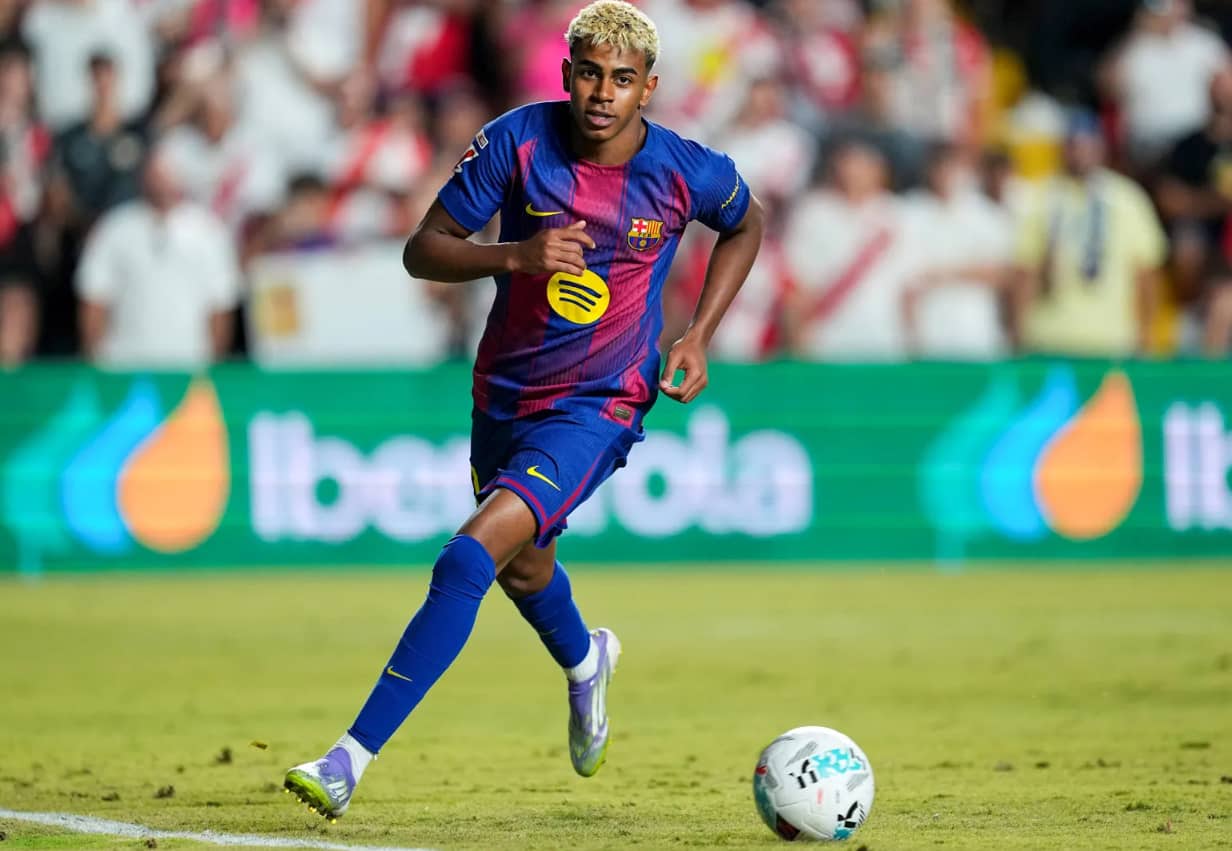
From Lamine Yamal’s frightening maturity to Mohamed Salah’s sustained brilliance, this is your definitive guide to the wingers dominating world football in 2025–26.
Why the Winger Role Has Never Been More Important?
Modern football places impossible demands on wide attackers. They must:
- Deliver elite attacking numbers – Double-digit goals and assists are now baseline expectations, not achievements.
- Break down organized defenses – Low blocks and tactical fouling mean wingers need intelligence and patience, not just pace.
- Press with intensity – Defensive work rate is non-negotiable at elite clubs. Lazy wingers don’t survive.
- Operate in multiple positions – The best can play both flanks, drift central, or even drop deep to collect the ball.
The criteria for this ranking reflect these realities: consistency across competitions, direct goal involvement, chance creation beyond assists, and performance against top-tier opposition.
Top 10 Best Wingers in the World Right Now
Here are the elite wide attackers setting the standard in 2025–26.
| Rank | Player | Club | Country |
|---|---|---|---|
| 1 | Lamine Yamal | Barcelona | Spain |
| 2 | Vinícius Jr | Real Madrid | Brazil |
| 3 | Mohamed Salah | Liverpool | Egypt |
| 4 | Bukayo Saka | Arsenal | England |
| 5 | Raphinha | Barcelona | Brazil |
| 6 | Michael Olise | Bayern Munich | France |
| 7 | Khvicha Kvaratskhelia | PSG | Georgia |
| 8 | Luis Díaz | Liverpool | Colombia |
| 9 | Bradley Barcola | PSG | France |
| 10 | Rodrygo | Real Madrid | Brazil |
1. Lamine Yamal – Barcelona (Spain)
Why he’s ranked first
Yamal isn’t just talented—he’s frighteningly complete for an 18-year-old. His vision, passing accuracy, and decision-making under pressure match those of players ten years older. What separates him from other prodigies is consistency: he performs every week, not just in highlights.
Elite strengths
Creating high-quality chances through precision passing rather than just volume. His expected assists numbers place him among Europe’s top playmakers, and his ability to manipulate defenders with body feints creates space from nothing.
Big-match credentials
Champions League performances and El Clásico displays prove he doesn’t shrink when the stakes rise. That maturity at his age is genuinely rare.
2. Vinícius Jr – Real Madrid (Brazil)
What makes him elite
Vinícius warps entire defensive structures. His pace and dribbling force opponents to commit two defenders, creating numerical superiority elsewhere. Even scoreless performances often feature him dominating attention and opening space for teammates.
Signature ability
Beating defenders in isolated duels. He completes more successful dribbles per 90 than almost anyone in Europe, and his acceleration from standing starts is unmatched.
Tactical gravity
Madrid’s attacking strategy frequently revolves around getting him one-on-one with fullbacks. That level of team dependence only exists for truly special players.
3. Mohamed Salah – Liverpool (Egypt)
Why does he remain elite
While younger stars grab headlines, Salah quietly maintains production levels that would make him most teams’ best player. His positioning, intelligence, and clinical finishing keep him among the world’s most dangerous attackers.
Underrated quality
Movement without possession. Salah’s runs into the box are perfectly timed, and his ability to find space in crowded areas remains exceptional.
Age-defying performance
Most wingers decline sharply after 30. Salah adapted by relying less on pure pace and more on intelligent positioning and shot selection.
4. Bukayo Saka – Arsenal (England)
Core strength
Saka combines technical excellence with remarkable reliability. He rarely produces genuinely poor performances, and his versatility—goals, assists, ball-carrying—makes him Arsenal’s most complete attacker.
Pressure performance
Some players crumble in big moments. Saka thrives when opponents focus defensive attention on him and delivers in high-stakes matches.
Continuous improvement
Unlike many young stars who plateau, Saka improves each season. His finishing, decision-making, and tactical awareness have all sharpened noticeably.
5. Raphinha – Barcelona (Brazil)
Why has his stock risen
Raphinha’s output has exploded in the right system. His directness, relentless pressing, and improved shot selection transformed him from good to elite.
Key attribute
Fearless attacking mentality. He takes defenders on repeatedly without letting failures affect confidence.
Tactical flexibility
Comfortable on either wing or centrally, giving Barcelona options in how they structure attacks.
6. Michael Olise – Bayern Munich (France)
What sets him apart
Olise blends elegance with ruthless efficiency. His technique is beautiful, but he’s clinically effective in the final third where it matters.
Best quality
Set-piece delivery and dead-ball situations. Few wingers can genuinely change matches without touching the ball in open play.
Creative intelligence
Manipulates defenders with body feints and sudden pace changes that create shooting angles seemingly from nowhere.
7. Khvicha Kvaratskhelia – PSG (Georgia)
Why he ranks here
Kvaratskhelia’s value appears in subtle ways—pre-assists, decoy runs, and how his movement creates space. He doesn’t always dominate highlights, but his impact on team offense is massive.
Defining skill
Ball retention under pressure. He rarely panics when swarmed and consistently finds the right pass in chaotic situations.
Versatility
Comfortable on either flank or drifting central, making him extremely difficult to game-plan against.
8. Luis Díaz – Liverpool (Colombia)
What he brings
Pure attacking aggression. Díaz plays with fearless directness, constantly attacking space and forcing defensive errors through relentless pressure.
Signature trait
Pace and close control at speed. He beats defenders in tight spaces while maintaining control at full sprint.
Team impact
Liverpool’s press becomes significantly more effective with Díaz’s energy leading from the front.
9. Bradley Barcola – PSG (France)
Why is he rising
Barcola evolved from a promising prospect to a genuine goal threat. His finishing improved dramatically, and his understanding of when to run behind defenses has sharpened.
Key strength
Timing on through balls and off-the-shoulder movement. He punishes defensive mistakes ruthlessly.
Growth trajectory
Still only 22, with clear room for improvement in decision-making and defensive contribution.
10. Rodrygo – Real Madrid (Brazil)
Why he’s invaluable
Rodrygo is Madrid’s ultimate big-game player. His calmness in critical moments and ability to deliver in knockout football make him irreplaceable despite sometimes limited minutes.
Standout trait
Two-footed finishing and positional flexibility. He plays anywhere across the front line without losing effectiveness.
Clutch factor
Some players perform worse under pressure. Rodrygo seems to elevate when the stakes are highest.
Best Left Wingers in the World 2025–26
Left-sided attackers currently include football’s most devastating one-on-one specialists and inverted goal threats.
Elite left-wing tier:
- Vinícius Jr (Real Madrid)
- Luis Díaz (Liverpool)
- Khvicha Kvaratskhelia (PSG)
- Bradley Barcola (PSG)
- Rafael Leão (AC Milan)
- Gabriel Martinelli (Arsenal)
- Nico Williams (Athletic Bilbao)
High-impact left wingers:
- Phil Foden (Manchester City)
- Son Heung-min (Tottenham)
- Kaoru Mitoma (Brighton)
- Jérémy Doku (Manchester City)
- Alejandro Garnacho (Manchester United)
- Marcus Rashford (Manchester United)
- Kingsley Coman (Bayern Munich)
Best Right Winger in the World 2025–26
Right-sided attackers are dominated by left-footed inverted wingers who cut inside to create overloads and shooting opportunities.
Top-tier right wingers:
- Lamine Yamal (Barcelona)
- Mohamed Salah (Liverpool)
- Bukayo Saka (Arsenal)
- Raphinha (Barcelona)
- Michael Olise (Bayern Munich)
- Rodrygo (Real Madrid)
Elite right-wing creators:
- Pedro Neto (Chelsea)
- Mohammed Kudus (West Ham)
- Takefusa Kubo (Real Sociedad)
- Jarrod Bowen (West Ham)
- Leroy Sané (Bayern Munich)
- Ousmane Dembélé (PSG)
- Savinho (Manchester City)
- Bernardo Silva (Manchester City)
Complete Rankings: 110 Best Wingers in the World 2025–26
1–10
- Lamine Yamal (Barcelona)
- Vinícius Jr (Real Madrid)
- Mohamed Salah (Liverpool)
- Bukayo Saka (Arsenal)
- Raphinha (Barcelona)
- Michael Olise (Bayern Munich)
- Khvicha Kvaratskhelia (PSG)
- Luis Díaz (Liverpool)
- Bradley Barcola (PSG)
- Rodrygo (Real Madrid)
11–25
- Pedro Neto (Chelsea)
- Nico Williams (Athletic Bilbao)
- Mohammed Kudus (West Ham)
- Leroy Sané (Bayern Munich)
- Takefusa Kubo (Real Sociedad)
- Jarrod Bowen (West Ham)
- Savinho (Manchester City)
- Ousmane Dembélé (PSG)
- Johan Bakayoko (PSV)
- Amad Diallo (Manchester United)
- Ángel Di María (Benfica)
- Iñaki Williams (Athletic Bilbao)
- Yeremy Pino (Villarreal)
- Kingsley Coman (Bayern Munich)
- Franco Mastantuono (River Plate)
26–50
- Rafael Leão (AC Milan)
- Son Heung-min (Tottenham)
- Phil Foden (Manchester City)
- Gabriel Martinelli (Arsenal)
- Kaoru Mitoma (Brighton)
- Jérémy Doku (Manchester City)
- Jack Grealish (Manchester City)
- Federico Chiesa (Liverpool)
- Bernardo Silva (Manchester City)
- Riyad Mahrez (Al-Ahli)
- Alejandro Garnacho (Manchester United)
- Serge Gnabry (Bayern Munich)
- Marcus Rashford (Manchester United)
- Christian Pulisic (AC Milan)
- Dejan Kulusevski (Tottenham)
- Bryan Mbeumo (Brentford)
- João Félix (Chelsea)
- Ferran Torres (Barcelona)
- Arda Güler (Real Madrid)
- Ademola Lookman (Atalanta)
- Sadio Mané (Al-Nassr)
- Ismaïla Sarr (Crystal Palace)
- Luis Sinisterra (Bournemouth)
- Allan Saint-Maximin (Al-Ahli)
- Antony (Manchester United)
51–75
- Moussa Diaby (Al-Ittihad)
- Xavi Simons (RB Leipzig)
- Edon Zhegrova (Lille)
- Wilfried Zaha (Galatasaray)
- Leon Bailey (Aston Villa)
- Brennan Johnson (Tottenham)
- Harvey Barnes (Newcastle)
- Samuel Chukwueze (AC Milan)
- Noni Madueke (Chelsea)
- David Neres (Napoli)
- Ansu Fati (Barcelona)
- Hakim Ziyech (Galatasaray)
- Domenico Berardi (Sassuolo)
- Ritsu Doan (Freiburg)
- Cengiz Ünder (Fenerbahçe)
- Jota (Al-Ittihad)
- Pablo Sarabia (Wolves)
- Tete (Lyon)
- Pedro Gonçalves (Sporting CP)
- Luis Ocampos (Rayados)
- Hirving Lozano (PSV)
- Luis Henrique (Marseille)
- Crysencio Summerville (West Ham)
- Viktor Tsygankov (Girona)
- Karim Adeyemi (Borussia Dortmund)
76–110
- Matías Soulé (Roma)
- Álex Baena (Villarreal)
- Jesper Lindstrøm (Everton)
- Dodi Lukébakio (Sevilla)
- Callum Hudson-Odoi (Nottingham Forest)
- Leandro Trossard (Arsenal)
- Noah Lang (PSV)
- Samuel Iling-Junior (Bologna)
- Andreas Skov Olsen (Club Brugge)
- Jesper Karlsson (Bologna)
- Ilias Akhomach (Villarreal)
- Luis Palma (Celtic)
- Facundo Pellistri (Granada)
- Roony Bardghji (Copenhagen)
- Yankuba Minteh (Brighton)
- Ernest Nuamah (Lyon)
- Kevin Schade (Brentford)
- Bryan Gil (Girona)
- Thorgan Hazard (Anderlecht)
- Ivan Perišić (Hajduk Split)
- Rayan Cherki (Lyon)
- Nico González (Juventus)
- Julian Brandt (Borussia Dortmund)
- Johan Mojica (Villarreal)
- Jonathan David (Lille)
- Benjamin Bourigeaud (Rennes)
- Youssouf Fofana (AC Milan)
- Wilfried Singo (Monaco)
- Michael Antonio (West Ham)
- Takehiro Tomiyasu (Arsenal)
- Nico Paz (Como)
- Federico Dimarco (Inter Milan)
- Sergej Milinković-Savić (Al-Hilal)
- Lucas Paquetá (West Ham)
- Randal Kolo Muani (PSG)
How Winger Play Has Evolved in 2025–26?
- Goal-scoring expectations have skyrocketed:
A decade ago, 8 goals and 10 assists constituted a strong winger season. Today, those numbers would be considered underperforming for anyone at an elite club. The baseline has risen dramatically.
- Inverted positioning dominates tactics:
The vast majority of top wingers now operate on their “off” side, left-footers right, right-footers left. This creates better shooting angles and allows dangerous cut-inside moves onto stronger feet.
- Defensive work is mandatory:
Elite teams demand constant pressing from wide attackers. Wingers who don’t track back or pressure opponents struggle to maintain starting roles, regardless of attacking talent.
- Versatility extends careers:
The best wingers operate on both flanks, play centrally when needed, and adapt to different formations. One-dimensional speed specialists rarely survive at the highest level anymore.
Top 5 Best Winger in the World 2026: What Separates Them
- Impact without possession
Elite wingers influence matches even when not touching the ball. Their movement creates space, pulls defenders out of position, and opens passing lanes.
- Big-match consistency
Anyone can dominate weak opposition. The top 5 best winger in the world right now perform against elite defenses, in knockout matches, and when their teams desperately need them.
- Decision-making under pressure
The difference between good and great often comes down to split-second choices—when to shoot, pass, or dribble. Elite wingers consistently make the right call.
- Mid-match tactical adaptation
Opponents always plan to neutralize elite players. The best wingers recognize adjustments and find new ways to create danger when initial approaches get shut down.
Top 10 Best Winger in 2025: Emerging Talents
- Lamine Yamal (Barcelona) – Already elite at 18, with potential to dominate for a decade.
- Bradley Barcola (PSG) – Improving rapidly and could crack the top five within a season.
- Franco Mastantuono (River Plate) – South American sensation likely heading to Europe soon.
- Savinho (Manchester City) – Adapting to the Premier League faster than expected.
- Yankuba Minteh (Brighton) – Raw talent with frightening speed and directness.
- Roony Bardghji (Copenhagen) – Scandinavian prospect showing elite potential.
- Amad Diallo (Manchester United) – Finally getting consistent minutes and delivering.
- Johan Bakayoko (PSV) – Eredivisie star ready for a major league move.
- Yeremy Pino (Villarreal) – Injury setbacks haven’t diminished his talent ceiling.
- Arda Güler (Real Madrid) – Technical brilliance waiting for regular playing time.
Best Wingers in the World 2026: Predicted Movements
Transfer speculation
Several elite wingers are entering contract situations that could reshape the market. Mohamed Salah’s Liverpool future remains uncertain, while players like Nico Williams and Takefusa Kubo are attracting interest from European giants.
Tactical evolution
More teams are experimenting with fluid front threes where wingers interchange positions constantly. This trend favors versatile players who can operate across the attacking line.
Youth acceleration
The gap between “prospect” and “elite performer” is shrinking. Teams increasingly trust teenagers in critical roles, meaning the best wingers in the world 2026 rankings may look significantly younger than today.
Conclusion
The landscape of elite wingers in 2025–26 showcases a perfect storm of established brilliance and fearless youth.
Lamine Yamal leads a generation that doesn’t play tentatively—they perform with the confidence of proven stars.
Meanwhile, veterans like Salah and Saka continue demonstrating that intelligent positioning and consistent decision-making can rival raw athleticism.
Modern wingers shoulder impossible expectations: score 20 goals, create 15 more, press relentlessly, and adapt to multiple tactical roles.
The players who master this complete skill set will define the position for years to come.
Whether you’re tracking the top 10 best wingers in the world or watching how emerging talents develop, one truth is clear: the winger position has never carried more responsibility or delivered more match-winning moments in football history.
FAQs
- Who is the best winger in the world right now in 2026?
Lamine Yamal currently holds the top spot among the best wingers in the world due to his exceptional combination of creativity, maturity, and consistent end product at just 18 years old. His performances in crucial matches demonstrate a level of composure rarely seen in young players.
- What makes the best left wingers in the world different from right wingers?
The best left wingers in the world typically include more natural right-footers playing inverted roles to cut inside and shoot. Right wingers often feature left-footers doing the same. Positional differences also exist—left wingers may face different defensive structures depending on opponent tactics.
- Who are the top 5 best winger in the world 2026?
Based on current form and trajectory, the top 5 best winger in the world 2026 are likely to be Lamine Yamal, Vinícius Jr, Mohamed Salah, Bukayo Saka, and Raphinha, assuming they maintain current performance levels and avoid serious injuries.
- How do the best wingers in the world 2026 compare to past generations?
The best wingers in the world 2026 are more complete players than previous generations. They score more goals, press more intensively, and adapt to multiple tactical roles. Historical wingers were often specialists; modern elite wingers are versatile attackers.
- What separates the top 10 best winger in 2025 from others?
The top 10 best winger in 2025 consistently perform against elite opposition, deliver in high-pressure situations, and maintain production across multiple competitions. They also demonstrate tactical intelligence and adapt when opponents adjust to stop them.
- Who is the best right winger in the world currently?
Lamine Yamal is currently the best right winger in the world, though Mohamed Salah and Bukayo Saka remain extremely close. All three deliver elite production, but Yamal’s creativity and maturity at 18 give him a slight edge in overall impact.
Also Check:
Bookmark this page for regular updates on the world’s best wingers and emerging talents shaping modern football. Stay informed about tactical trends and player rankings as the 2025–26 season unfolds.