by
by The Khelo India Tribal Games 2026 mark a significant shift in how India approaches sports development.
Running from March 25 to April 6 across Chhattisgarh, this is the country’s first national multi-sport event built exclusively around tribal athletes.
This isn’t symbolic inclusion. Tribal communities have produced consistent talent in disciplines like archery, athletics, and wrestling for years, but without structured pathways to national-level competition.
The Khelo India Tribal Games 2026 changes that by creating a dedicated identification and development system.
Khelo India Tribal Games 2026

Khelo India Tribal Games 2026
The Khelo India Tribal Games operate within the Khelo India Scheme framework, which focuses on grassroots talent identification across India.
This inaugural edition targets a specific gap: the absence of national-level platforms for tribal athletes.
| Category | Details |
|---|---|
| Event Name | Khelo India Tribal Games (KITG) |
| Edition | 1st (Inaugural) |
| Dates | March 25 – April 6, 2026 |
| Host State | Chhattisgarh |
| Host Cities | Raipur, Jagdalpur, Sarguja |
| Total Sports | 7 medal sports + 2 demonstration sports |
| Participants | Athletes from States & Union Territories |
Seven sports award medals: athletics, football, hockey, weightlifting, archery, swimming, and wrestling.
Mallakhamb and kabaddi appear as demonstration sports, showcasing traditional disciplines alongside mainstream competitions.
The sport selection isn’t random. Archery and wrestling connect directly to skills already present in many tribal communities.
Football, hockey, and swimming provide entry points into sports with established competitive structures at state, national, and international levels.
Khelo India Tribal Games 2026 Host
Chhattisgarh was selected to host the first Khelo India Tribal Games 2026 based on its tribal population density and distributed sports infrastructure.
Four major organizations coordinate the event:
- Ministry of Youth Affairs & Sports
- Sports Authority of India (SAI)
- Indian Olympic Association (IOA)
- Chhattisgarh State Government
This isn’t just administrative collaboration. Each body brings specific capabilities: the Ministry handles policy and funding, SAI manages training and athlete development, IOA ensures competition standards align with national frameworks, and the state government provides local infrastructure and community engagement.
The state’s role extends to transportation arrangements, accommodation support, and creating accessibility for athletes traveling from remote tribal regions across Chhattisgarh and neighboring states.
Khelo India Tribal Games 2026 Host Cities
Three cities host the Games, distributing events geographically to improve athlete access rather than centralizing everything in one urban center.
- Raipur: The state capital serves as the primary competition hub. It hosts five sports: archery, football, hockey, swimming, and weightlifting. Venues include the Sardar Vallabhbhai Patel International Hockey Stadium, Swami Vivekanand Athletics Stadium, International Swimming Pool, and university grounds. Raipur’s infrastructure supports multiple simultaneous events with proper facilities.
- Jagdalpur: Positioned in southern Chhattisgarh near tribal-majority areas, Jagdalpur hosts athletics at Krida Prisar in Dharampura. This location choice reduces travel distances for athletes from surrounding tribal regions and demonstrates commitment to bringing national competition into these communities rather than requiring everyone to travel to major cities.
- Sarguja: The northern host city conducts wrestling competitions at Gandhi Stadium. Sarguja’s inclusion extends geographic coverage across Chhattisgarh’s tribal belt, ensuring athletes from different regions have reasonable access to competition venues.
Khelo India Tribal Games 2026 Venues
| City | Venue | Sport | Dates (2026) |
|---|---|---|---|
| Raipur | Open Ground, Directorate of Youth & Welfare | Archery | 30 Mar – 3 Apr |
| Raipur | Football Ground, Pt. Ravishankar Shukla University | Football | 26 Mar – 3 Apr |
| Raipur | Swami Vivekanand Athletics Stadium | Football (cont.) | 26 Mar – 3 Apr |
| Raipur | Sardar Vallabhbhai Patel International Hockey Stadium | Hockey | 27 Mar – 1 Apr |
| Raipur | International Swimming Pool | Swimming | 25 Mar – 28 Mar |
| Raipur | Open Ground, Pt. Ravishankar Shukla University | Weightlifting | 26 Mar – 29 Mar |
| Jagdalpur | Krida Prisar, Dharampura | Athletics | 30 Mar – 3 Apr |
| Sarguja | Gandhi Stadium | Wrestling | 28 Mar – 2 Apr |
Venue selection balances facility quality with accessibility. Sports requiring specialized infrastructure, like swimming, use established facilities.
Events like archery and weightlifting use university grounds and open spaces that meet competition standards without requiring permanent specialized construction.
Khelo India Tribal Games 2026 Dates
The Khelo India Tribal Games 2026 dates run from March 25 through April 6, 2026—13 days of competition across all venues.
- March 25 (Day 1): Opening ceremony launches the event. Swimming competitions begin immediately, establishing tournament momentum.
- March 26 – April 2 (Days 2-9): Main competition phase with overlapping events across three cities. Football and hockey start early in this window. Weightlifting runs through the mid-phase. Archery and athletics begin on March 30. Wrestling competitions span March 28 to April 2.
- April 3-6 (Days 10-13): Finals conclude across different sports. Closing ceremonies and award presentations happen during this window, with the exact final day depending on when specific sport championships finish.
Demonstration sports (kabaddi and mallakhamb) run parallel to medal events throughout the competition period, giving these traditional disciplines visibility without disrupting the main tournament schedule.
Khelo India Tribal Games 2026 Schedule
Competition scheduling staggers events to prevent athlete fatigue and optimize venue usage.
- Opening Phase (March 25-29): Swimming starts on day one. Football and weightlifting begin on March 26. Hockey follows on March 27. These sports either need controlled environments or fit naturally into early-tournament slots without creating scheduling conflicts.
- Middle Phase (March 30 – April 1): Archery and athletics competitions launch. Both sports attract high tribal participation, so mid-tournament scheduling gives athletes adequate time to arrive, complete registration, and prepare properly after traveling from remote regions.
- Closing Phase (April 2-6): Wrestling wraps April 2. Finals across all sports happen from April 3 to 6. This structure keeps high-profile events visible through the tournament’s conclusion, maintaining spectator engagement and media coverage.
The staggered schedule gives multi-sport athletes recovery time between events while keeping all venues actively used without overcrowding.
Khelo India Tribal Games 2026 Mascot
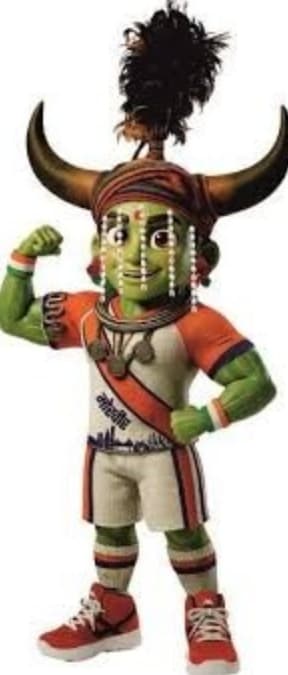
“Morveer” serves as the official mascot for the Khelo India Tribal Games 2026.
The name reflects tribal values of courage and warrior identity, while the design incorporates visual elements from tribal art traditions.
Rather than representing one specific tribal group, Morveer blends symbols common across India’s diverse tribal communities.
This approach emphasizes unity while respecting the distinct identities of different tribal regions.
The mascot appears throughout event materials: promotional campaigns, venue decorations, merchandise, and cultural program presentations.
It functions as a constant visual reminder that this competition honors cultural heritage alongside athletic performance.
Using a culturally grounded mascot instead of a generic sports symbol reinforces the event’s commitment to celebrating tribal identity, not just using tribal athletes for national sports goals.
Khelo India Tribal Games 2026 Theme
The event’s theme focuses on three interconnected goals: inclusion, opportunity creation, and systematic talent identification.
Central thematic pillars:
- Building structured pathways for athletes from regions lacking organized sports infrastructure
- Integrating tribal athletes into national competitive systems
- Proving that geographic isolation and community background don’t limit athletic potential
- Creating sustainable, long-term development programs beyond single-event competitions
Tribal communities represent roughly 8% of India’s population but have historically been underrepresented in national sports programs. The theme directly targets this gap.
Cultural celebration runs parallel to competition. Traditional sports demonstrations, tribal heritage exhibitions, and cultural performances happen alongside medal events, showing that effective sports development respects and incorporates community identity rather than treating athletes as isolated from their cultural context.
Khelo India Tribal Games 2026 Age Limit
The Khelo India Tribal Games 2026 age limit varies by sport, following standard national competition age categories.
Typical age divisions:
- Sub-junior categories for younger athletes (sport-specific)
- Junior divisions generally cover ages 14-18
- Youth categories typically include ages 18-21
Each medal sport and demonstration sport has specific age requirements determined by its national federation guidelines.
These limits balance fair competition with early talent identification, catching athletes young enough for meaningful long-term development opportunities.
Beyond age requirements, athletes must meet tribal community eligibility criteria.
Documentation requirements ensure the event maintains its focus as a dedicated platform for underrepresented tribal groups rather than becoming a general youth competition that anyone can enter.
Practical View: What Happens After The Tournament Ends
Most people focus on medals and rankings. The real value of the Khelo India Tribal Games shows up later.
Top performers don’t just get awards. They gain access to Sports Authority of India training academies, scholarship programs, and selection consideration for state and national teams.
SAI tracks promising athletes for ongoing development programs.
An archer from a remote tribal area who performs well here might spend the next two years in a specialized training program, then compete at national championships, then potentially represent India internationally.
That progression rarely happens without events like this creating the initial visibility.
The event creates pipelines, not just competition results. Think of it as the starting point of a longer journey, not the destination itself.
How This Event Differs From Other National Competitions?
The Khelo India Youth Games and Khelo India University Games draw from established sports programs where athletes already have coaching, facilities, and competitive experience. The Tribal Games work differently.
Many participants are new to structured tournament formats. Competition levels vary because some athletes have had minimal formal training.
That’s exactly the point—the event identifies raw talent that can be developed, not just athletes who’ve already had years of professional coaching.
The focus isn’t on finding the most polished performers. It’s on finding athletes with natural ability who haven’t had opportunities to develop it systematically.
FAQs
- What sports are included in the Khelo India Tribal Games 2026?
Seven medal sports (athletics, football, hockey, weightlifting, archery, swimming, wrestling) and two demonstration sports (mallakhamb, kabaddi) make up the competition program.
- Where are the Khelo India Tribal Games 2026 being held?
Chhattisgarh hosts the event across three cities: Raipur handles most sports, Jagdalpur hosts athletics, and Sarguja conducts wrestling competitions.
- When do the Khelo India Tribal Games 2026 start?
The Games run March 25 to April 6, 2026, starting with the opening ceremonies and swimming on March 25, with competitions staggered across 13 days.
- Who qualifies for the Khelo India Tribal Games?
Athletes from tribal communities across Indian states and union territories can participate, meeting both sport-specific age requirements and tribal community eligibility criteria.
- What support do athletes receive after competing?
Top performers gain access to SAI training academies, scholarship programs, coaching support, and selection opportunities for state and national teams through structured development pathways.
Looking Beyond The 2026 Competition
The Khelo India Tribal Games 2026 represents more than a first-time event.
It’s a systematic attempt to expand India’s athletic talent pool by reaching communities historically overlooked in national sports development.
Success measurements won’t be clear in April 2026.
They’ll emerge over the following years as athletes identified here progress through training programs and start competing at higher levels, demonstrating that talent exists across all communities when systems are built to find and develop it.