by
by Baseball’s greatest players didn’t all wear major league uniforms.
Some of the most talented athletes in the sport’s history played in the Negro Leagues, barred from the majors by segregation.
These weren’t second-tier players waiting for a chance.
They were elite competitors who regularly defeated major league teams in exhibition games and drew crowds that rivaled the big leagues.
The greatest Negro League players dominated their era and left legacies that still resonate today.
Their records are imperfect. Documentation was sparse, and many games went unrecorded.
Greatest Negro League Players in Baseball History
But the eyewitness accounts, the head-to-head victories over Hall of Famers, and the eventual success of those who reached the majors all tell the same story: these players were exceptional.
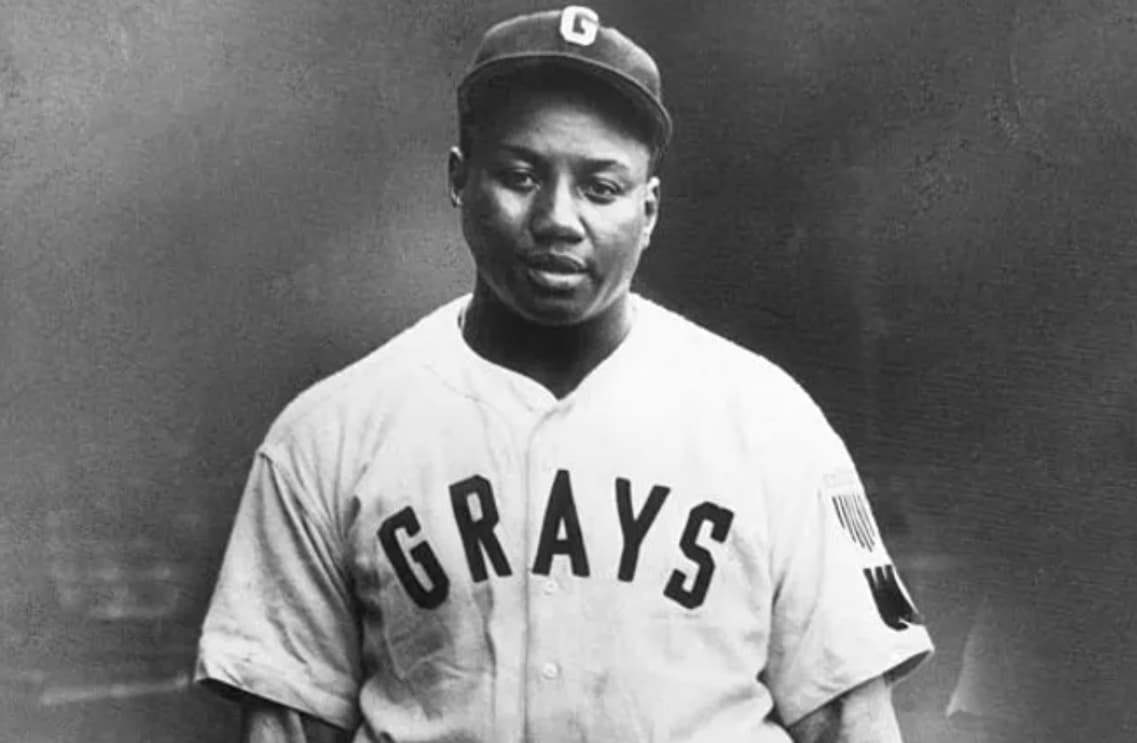
1. Josh Gibson – The Home Run King
Josh Gibson might have been the greatest power hitter baseball ever saw.
Stories of Gibson’s home runs sound impossible until you realize who’s telling them. Hall of Famers who faced him.
Teammates who watched daily. Opponents who had no reason to exaggerate. They all said the same thing: nobody hit a baseball like Josh Gibson.
Playing primarily for the Homestead Grays, Gibson combined mammoth power with a career batting average estimated at around .350.
He rarely struck out despite his aggressive swing, showing remarkable bat control for someone generating that much force.
Gibson died in 1947 at age 35, just months before Jackie Robinson integrated Major League Baseball. Many believe his deteriorating health cost him the honor of being first.
2. Satchel Paige – The Showman Who Could Back It Up
Satchel Paige talked a big game. Then he went out and proved every word.
His fastball was legendary, but Paige’s real genius was control.
He could put the ball anywhere he wanted, changing its speed and location to keep hitters guessing.
That precision let him pitch deep into his 40s when raw velocity abandoned most pitchers.
Paige barnstormed constantly, pitching hundreds of innings annually across multiple leagues and countries.
When Cleveland signed him at 42, he still had enough to help win a World Series.
Joe DiMaggio, who faced the best pitchers in baseball, said Paige was the toughest he ever saw.
3. Oscar Charleston – The Five-Tool Dynamo
If you built the perfect baseball player, you’d create Oscar Charleston.
Power? He hit home runs that traveled as far as anyone else’s. Speed? He stole bases and covered center field with exceptional range.
Hitting? His career average hovered around .350. Defense? Fearless and instinctive. Baseball IQ? Off the charts.
John McGraw, who managed the Giants for three decades, called Charleston the greatest player he’d seen, regardless of league or race.
That’s not hyperbole—Charleston had everything, and he played with an intensity that intimidated opponents.
His transition to player-manager later in his career didn’t diminish his production. Charleston kept hitting well into his 40s.
4. Cool Papa Bell – Redefining Speed
Cool Papa Bell ran faster than anyone in baseball history.
That’s not just Negro League mythology. Players who competed in both leagues confirmed it.
Bell’s speed changed how teams played defense against him. Outfielders moved in because he could score from first on a single. Infielders rushed routine plays because he beat out ground balls that others couldn’t.
Beyond speed, Bell understood baseball completely. He knew when to steal, when to take the extra base, and when to bunt. His .337 career average came from hitting ability, not just legs.
Bell played into his mid-40s, remaining effective long after most speed players decline. His 1974 Hall of Fame induction recognized a 29-year career of excellence.
5. Buck Leonard – The Model of Consistency
Buck Leonard wasn’t flashy. He was just excellent every single year.
For 17 seasons, Leonard anchored first base for the Homestead Grays with smooth defense and reliable hitting.
He batted over .300 annually, drove in runs when needed, and played with quiet professionalism that made everyone around him better.
Paired with Josh Gibson, Leonard formed one of baseball’s most dangerous duos.
After Gibson’s death, Leonard carried the Grays on his shoulders, maintaining their championship standard through leadership and performance.
Major league teams offered him contracts in his 40s—recognition that came too late to showcase his prime, but validated what everyone already knew.
6. Martin Dihigo – The Complete Player
Martin Dihigo could dominate a game from anywhere on the field.
The Cuban star pitched, hit for power, played premium defense at multiple positions, and did it all at an All-Star level.
He led the Negro Leagues in home runs twice while also beating elite pitchers on the mound.
His 1938 season in Mexico remains legendary: 18-2 with a 0.90 ERA as a pitcher while leading the league with a .387 batting average. That’s not a typo. Same season. Same player.
Dihigo is the only athlete in the baseball halls of fame for four different countries. His versatility was unprecedented.
7. Willie Wells – The Thinking Man’s Shortstop
Willie Wells made shortstop an offensive position before anyone else.
At a time when shortstops were expected to field well and hit .250, Wells batted over .300 while providing Gold Glove defense.
His range, arm strength, and baseball intelligence made him the best at his position for nearly two decades.
Wells pioneered safety equipment, wearing a crude batting helmet after being beaned in 1942.
He studied pitchers, anticipated plays, and positioned himself perfectly. His impact went beyond statistics—he changed how people thought about shortstop.
8. Smokey Joe Williams – The Big Right-Hander
Joe Williams threw as hard as anyone who ever lived.
Standing 6-foot-4 with a blazing fastball and wicked curve, Williams overpowered hitters for three decades.
He struck out 20 batters in multiple games and consistently beat major league competition in exhibitions.
Ty Cobb faced Williams and said he’d win 30 games annually in the majors. Walter Johnson called him outstanding.
These weren’t compliments from casual observers—they came from the best players of the era.
Williams pitched effectively into his mid-40s, demonstrating rare longevity for power pitchers.
His reputation grew with every dominant performance.
9. Turkey Stearnes – Power and Speed Combined
Turkey Stearnes could beat you with his bat or his legs.
The left-handed center fielder led the Negro National League in home runs seven times while stealing bases regularly.
His unusual batting stance and powerful swing made him one of the league’s most dangerous hitters.
Stearnes played 18 seasons, primarily for the Detroit Stars, and maintained a career average of .350.
His quiet personality kept him from seeking attention, but his performance demanded it.
His 2000 Hall of Fame induction came decades after his death—belated recognition for a player who deserved it much sooner.
10. Leon Day – The Underrated Ace
Leon Day had everything great pitchers need: velocity, control, competitiveness, and durability.
His no-windup delivery put fastballs on hitters before they could react. Day threw hard but pitched smart, changing speeds and hitting spots.
Some teammates claimed he was better than Satchel Paige—high praise but not without merit.
Day served in World War II, then came back and threw a no-hitter on Opening Day 1946.
He pitched brilliantly, hit well for a pitcher, and played other positions when needed.
His 1995 Hall of Fame induction came 17 years after his death, recognition that should have arrived sooner.
FAQs
- How many Negro League players are in the Baseball Hall of Fame?
More than 35 Negro League players, managers, and executives have been inducted into the National Baseball Hall of Fame in Cooperstown, with research continuing to identify others deserving recognition.
- Could Negro League players really compete with major leaguers?
Absolutely. Negro League teams regularly defeated major league all-star squads in exhibitions, and players like Jackie Robinson, Willie Mays, and Hank Aaron proved Negro League talent translated seamlessly to the majors.
- Why are Negro League statistics incomplete?
Many games weren’t officially recorded, barnstorming tours lacked documentation, and newspapers didn’t always cover black baseball. Researchers continue working to verify and compile complete records.
- Who was faster: Cool Papa Bell or Rickey Henderson?
While direct comparison is impossible, contemporaries universally called Bell the fastest player they’d seen. His legendary speed exceeded even modern speedsters, though Henderson holds the all-time stolen base record.
- Did any Negro League team consistently beat major league teams?
Yes. Teams like the Kansas City Monarchs and Homestead Grays won the majority of their exhibition games against major league competition, proving the talent level was equal or superior.
- When did MLB officially recognize the Negro Leagues?
In December 2020, Major League Baseball elevated the Negro Leagues to “major league” status for the 1920-1948 period, incorporating their statistics into official baseball records.
Conclusion
The greatest Negro League players proved their excellence every time they stepped on the field.
They beat major league competition, drew massive crowds, and played with a style and skill that influenced baseball for generations.
Segregation delayed their recognition, but couldn’t erase their achievements.
Today, baseball continues uncovering its stories, documenting their statistics, and properly honoring their contributions.
These ten players represent the pinnacle of Negro League talent, athletes who belonged in any league, any era, and deserved the opportunities that segregation denied them.